
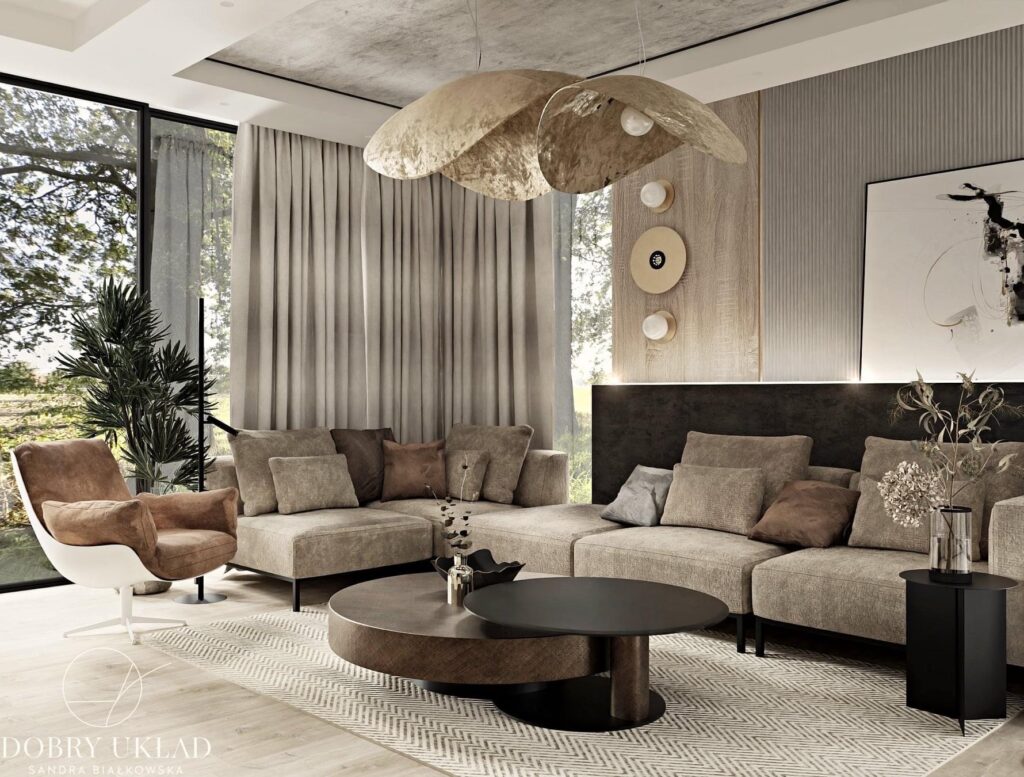
Curtains can quietly complete a room or become its main decorative feature. Before choosing a fabric, look at the whole wall: window size, furniture, floor, natural light and the height of the ceiling all influence the result.
For a contemporary room
Simple fabrics with visible texture can add warmth without a busy pattern. A wave heading makes regular, flowing folds where a compatible track can be fitted. Pick a tone related to the wall for a calm effect, or a deeper contrasting shade to frame the opening. Check that the fabric still looks good in the room’s evening light.
For a traditional interior
Pinch pleats, softly gathered headings and layered treatments can suit decorative mouldings and older furniture. A print may work beautifully if its scale matches the window and room. Allow enough wall space for substantial curtains to stack: a beautiful pattern loses its effect if squeezed into a narrow gap.
For a relaxed, layered look
Linen textures and softer weaves bring movement, while a sheer behind a heavier curtain gives flexible privacy. Be realistic about creasing and the amount of light a sheer lets through. In a bedroom, the decorative fabric can be paired with a lining chosen for the actual light conditions rather than appearance alone.
Bring the choice together
Take a large sample home and compare it with paint, flooring and upholstery at different times of day. Then confirm the heading, fullness, lining and finished drop. A coherent curtain scheme comes from those details working together, regardless of whether the room follows a named style.
Practical checklist
- Consider the complete wall, not only the window
- Compare samples in daylight and evening light
- Match pattern scale to the room
- Coordinate heading, fabric and hardware
- Balance appearance with privacy and light control
Frequently asked questions
Should curtains blend in or stand out?
Either can work. Decide whether the window should support the room quietly or act as a focal point, then test a large sample.
Are patterned curtains suitable for a small room?
Yes, when the scale and contrast suit the proportions. A large repeat may need careful placement and additional fabric.
Can modern curtains work in a traditional property?
Yes. Simple headings and fabrics can create a useful contrast, while colour and texture can still relate to the architecture.